


This is one of the most important questions we look for answers to every summer. Counting lynxes is not about luck, but about patient analysis of telemetry signals and several months of work in the field.
How do we count lynxes?
The field team of the West Pomeranian Nature Society controls places where – based on readings from telemetry collars – nests are located – i.e. places of birth. And those where lynxes raise their young after being transferred from the nest.
Telemetry data can really tell you a lot. When for a long time successive signals come from almost one place – we know that the lynx has gave a birth. Then she usually limits her activity, because she takes care of newborn kittens. This is one of the first signs that she could have become a mother.
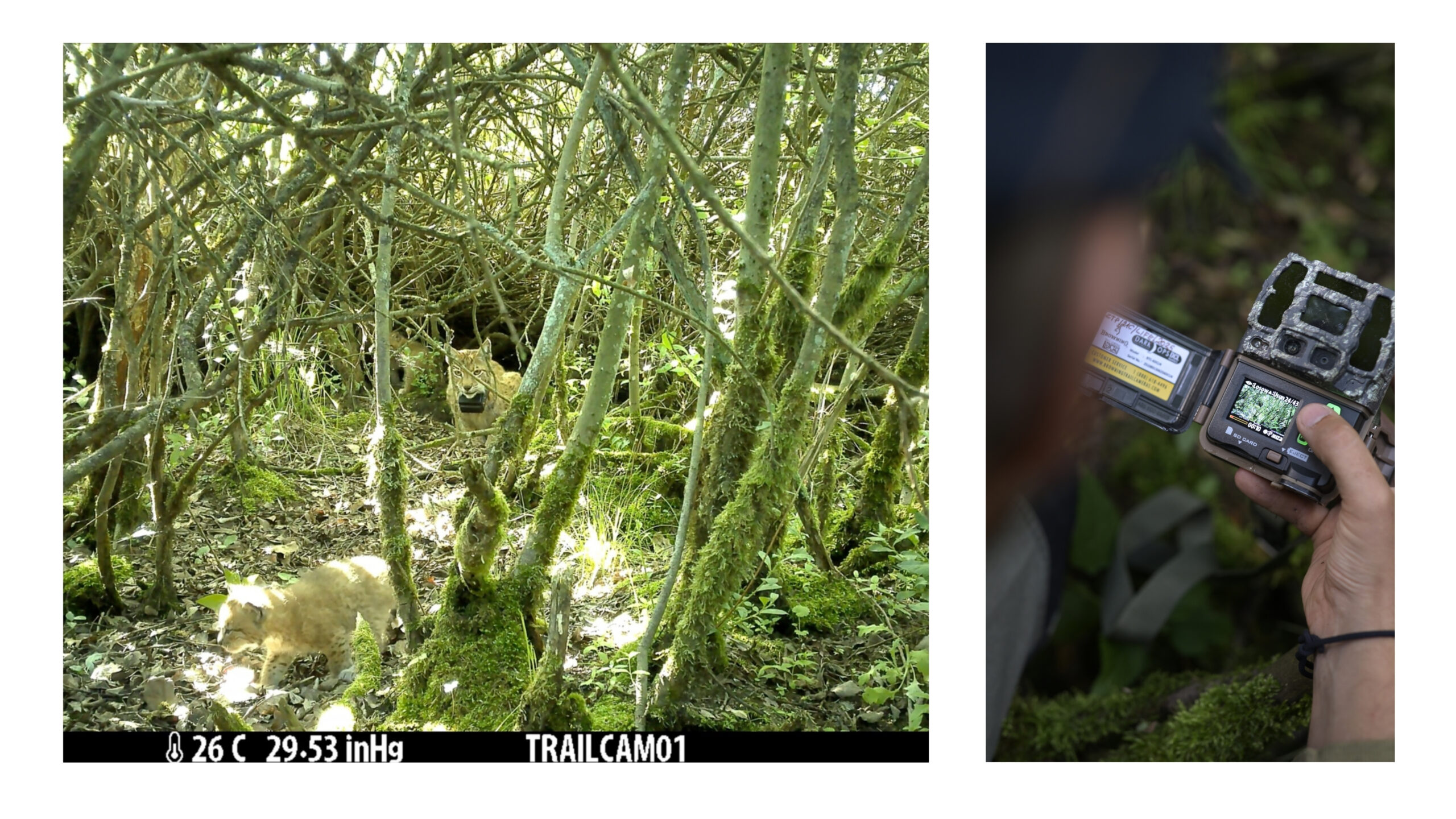
Later, it is time for careful verification. The field team goes to the place where there is often a meeting with the mother and her young. The control is carried out in a responsible and safe way for lynxes. It is not always possible to confirm everything, so camera traps are set up in the vicinity of the selected nests, thanks to which we can be sure how many kittens a given litter has. At the same time, we assess the condition of both the mother and her offspring
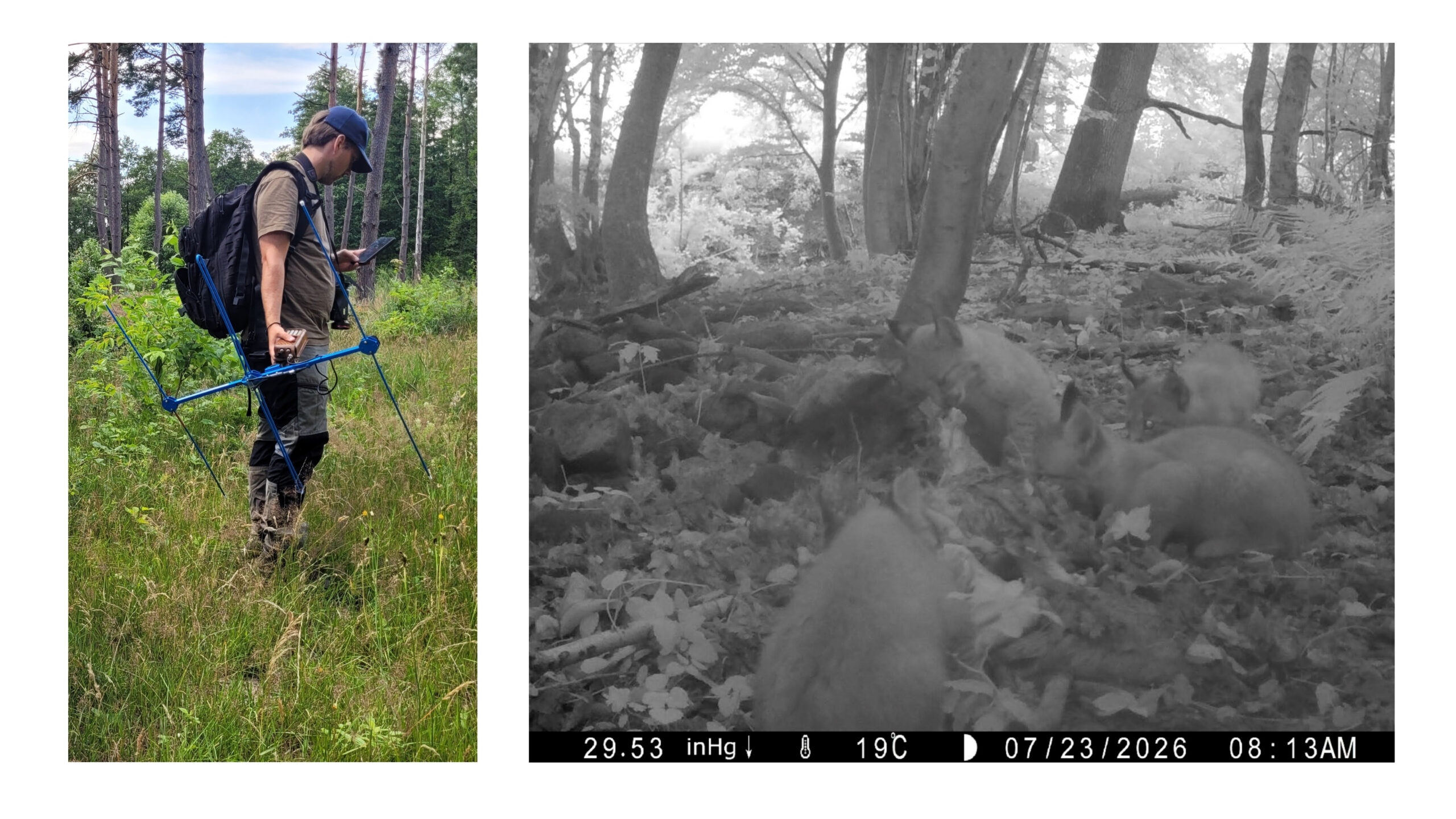
However, it happens that the story does not end happily. If, after a period of being in one place, the lynx returns to normal activity, we know that the litter has most likely been lost. Such information is equally important, as it allows you to reliably assess the reproductive success of the lynxes covered by the project.
The data obtained are also of great importance in the coming months. Thanks to them, we know how many young we can expect in winter when putting on telemetry collars and subsequent monitoring.
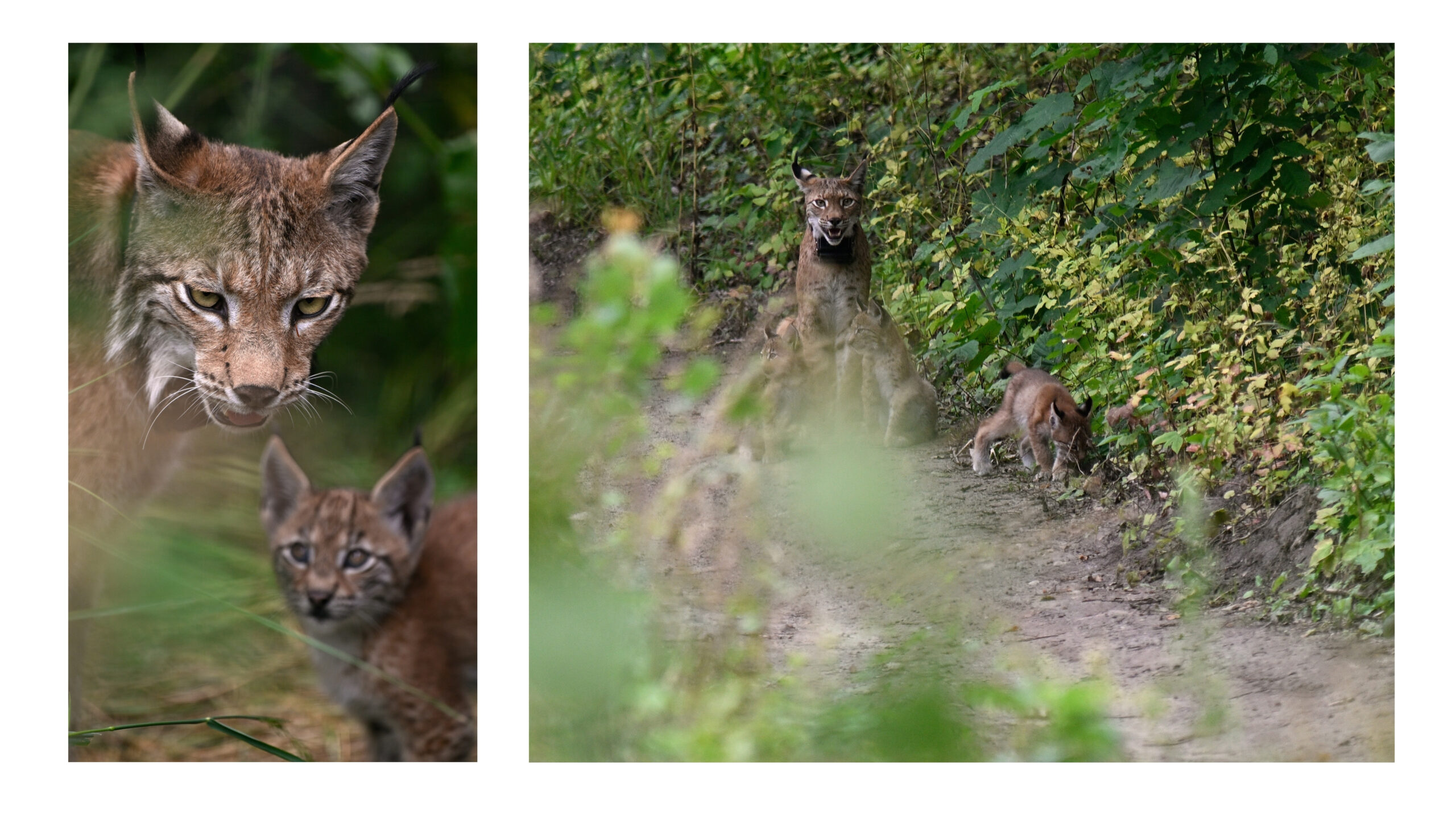
At the end of July 2026, we have confirmed: at least 24 young lynxes have been born in the wild!
However, this is not the final result. Field checks are still ongoing. We are still analyzing telemetry data, visiting more places and picking up the camera traps set up earlier, waiting for the mothers to safely leave the vicinity of their hiding places. 13 lynxes gave birth to young, but two of them lost their litter.
In the previous year, 2025, at least 40 lynxes were born.
We still have many kilometers and many hours of patient work ahead of us. We hope that the next inspections will bring more good news.
Keep your fingers crossed for the lynx and share your observations from the field with us. All information is valuable and we are grateful for each one. Each of you can help in the Return of the lynx to northern Poland.
__________________________
The activities are carried out by the West Pomeranian Nature Society as part of the LIFE22-NAT-PL-LIFE LYNX PL LT DE Project „Expanding the range of lynx populations in northern Poland”.
Funded by the EU. The views and opinions expressed are those of the author or authors only and do not necessarily reflect the views and opinions of the European Union or the European Climate, Environment and Infrastructure Executive Agency (CINEA). Neither the European Union nor CINEA are responsible for them. Co-financed by the National Fund for Environmental Protection and Water Management and the WWF Poland Foundation.
The project partners are: West Pomeranian Nature Society
WWF Poland,
Spychowo Forest District,
State Forests
Ekosistemų apsaugos centras
Rewilding Oder Delta
#LIFEprogramme
#LIFEproject
#LIFEAmplifier

 Polish
  English