


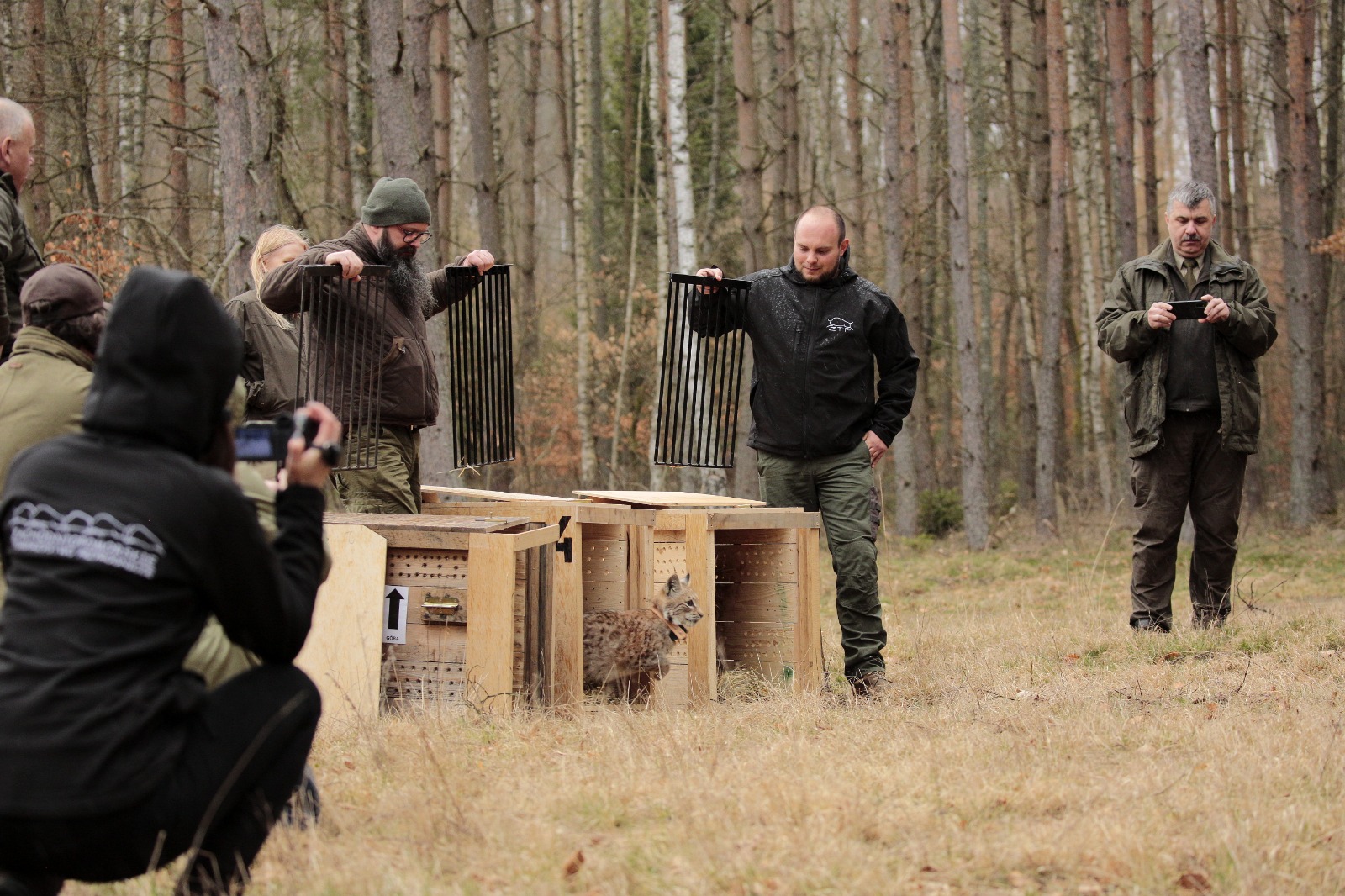
The rebuilding of the lynx population depends on the work of many people. One of the most important tasks is monitoring lynxes after their release into the wild. This task is carried out by the Intervention Emergency Service, which forms a team of ZTP employees. They are the ones who keep „watch” over the released individuals. They also decide when to release a particular lynx from the release enclosure.
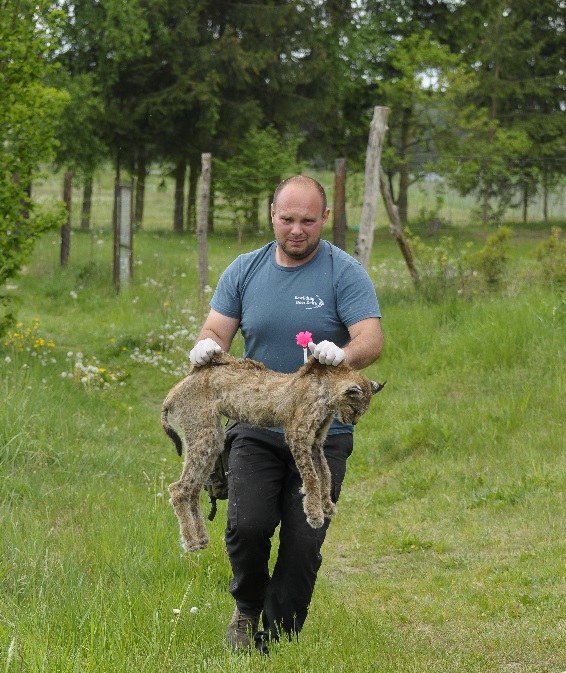
The Intervention Emergency Service bases its work on data sent from telemetry collars and information provided by observers, mainly local residents. The employees monitor the locations of the lynxes, find remains of prey, and relay this information to the maintained database. However, their most important role is responding to situations requiring intervention (accidents involving lynxes, undesirable behavior of a particular individual, illness). The Emergency Service staff are trained and can easily immobilize a lynx in the field for capture or collar replacement.
Recently, one of the most frequent tasks of the Emergency Service is capturing animals sick with scabies. Thanks to the interventions undertaken and subsequent treatment conducted at the Rehabilitation Center in Stobnica, the animals are released back into the wild as healthy individuals. In this way, the Emergency Service has already captured and released 8 lynxes.
Additionally, the field team attempts to replace telemetry collars on lynxes for which they have stopped working. Successfully, 18 collar replacement operations have already been carried out. This allows us to continue monitoring and respond quickly in cases requiring intervention.
The Emergency Service is also involved in bringing lynxes to the project and their adaptation. Interventions are also undertaken in situations when lynxes come too close to human settlements; they are chased away, and if the situations repeat, they are captured. Fortunately, there have been only a few such cases. The Intervention Emergency Service is a very important group of people who, thanks to their skills and experience, can effectively carry out practically any operation involving lynxes.
Recently, the work of the Emergency Service has become easier thanks to a new, second off-road vehicle for the project, which was purchased thanks to a donation from the Polish Society for Nature Conservation „Salamandra” from funds from the Biedronka network. This is another entity, alongside WWF Poland, that financially supports the implementation of the project POIS.02.04.00-0143/16 “Return of the lynx to northwestern Poland.”

 Polish
  English