


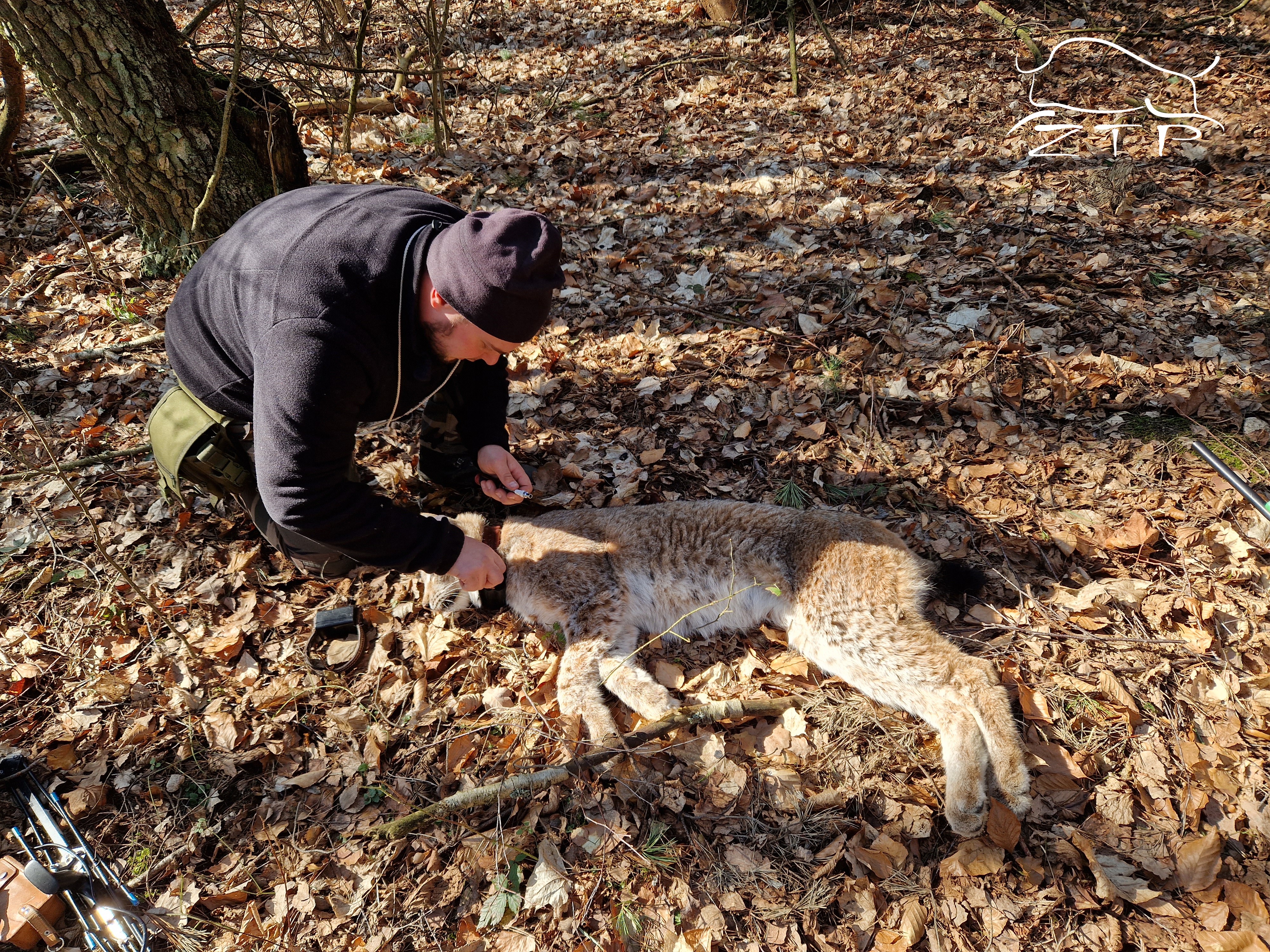
The beginning of the year is not only the time for lynx mating, which is extremely important for the survival of the species, but also the time for exchanging telemetry collars, primarily for females.
Telemetry collars raise many controversies among those observing our actions related to the reintroduction of this species. They may not look very friendly on a lynx’s neck, but they allow us to monitor lynxes in the field 🗺
As you may have noticed, we already have several generations of lynxes born in the wild 🐱🐱🐱 and seeing them in the field is a miracle (literally!).
❗️Thanks to the collars, we know their locations, the size of their territories, the relationships between individual animals, and most importantly – we can check if a female has given birth and how she is doing raising her kittens.❗️
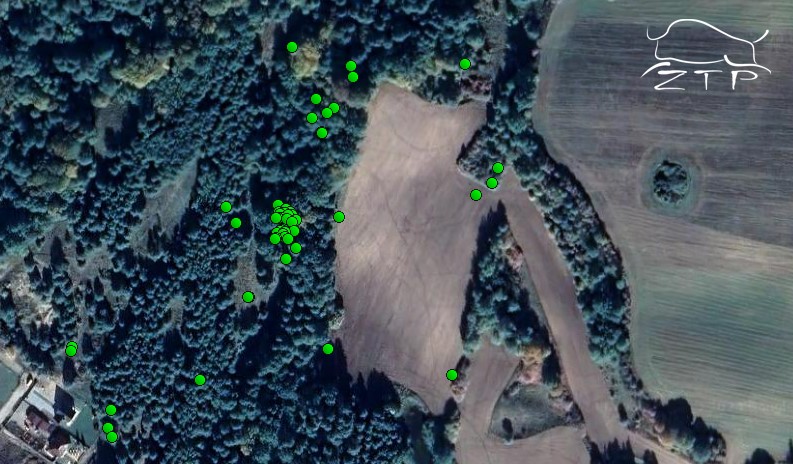
Don’t think that we are harassing the lynxes with our presence. We are far from that. Firstly, there are too few of us to visit each lynx even once every two weeks, and secondly, we can read a lot of information from the transmitted data. For example, a cluster of telemetry points in the same location informs us that a lynx has hunted a prey there, and when it leaves, we can go and check what has been hunted. Scientists use such data to prepare publications, which increases our knowledge about the species📈
Another benefit of telemetry collars is the information about den locations, allowing us to ensure the safety of mothers and their young, for example, by halting forestry work near such locations.
Moreover, telemetry collars primarily allow us to monitor the lynx population in the field. We have information about prey, the number of kittens that were born and survived, and we know the territories of individual animals. The more collars we have, the more data we gather, which influences our knowledge about the population status. This is extremely important, especially during the reintroduction program.
We know that many people are concerned that the collar is too large and heavy, which may hinder the lynxes’ natural functioning. We would like to reassure you.
📍The collar weighs only about 300 grams, while a lynx weighs on average: female – 20 kg, and male – 26 kg.
📍The collars do not interfere with hunting and raising young. In the initial period after releasing a lynx into the wild, we check how it is doing in the field.
📍The lynx collar has a leather strap that poses no threat to the animal, and a lynx can free itself from it if it really tries (we have already had several cases of collars being lost or discarded).
Our „collar” actions are dictated by the well-being of the lynx population, and we certainly do not act to the detriment of individual animals🐱 You can be at ease about the fate of the lynxes we care for 😊😻
📷R. Czerniawska

 Polish
  English